
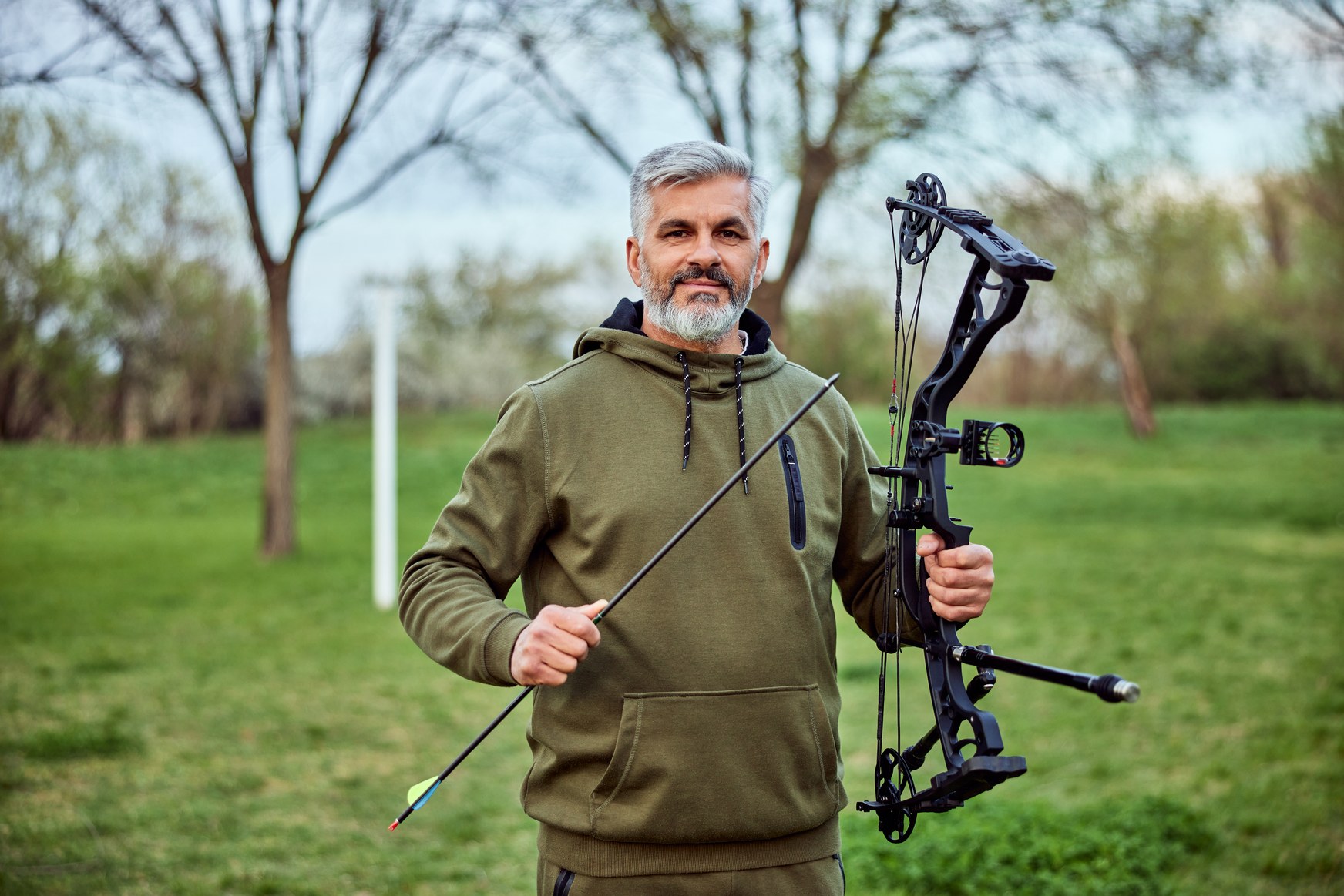
Short answer: start with your state wildlife agency — confirm the license and education requirements that apply to you, then find a beginner program, learn to shoot safely, and work with a mentor before buying anything. Bowhunting is target archery plus law, woodsmanship, field skills and judgment; the responsible path builds them in that order.
📋 Key Takeaways
- Legal requirements come first — they vary by state and change; verify with your state wildlife agency.
- Learn to shoot before you learn to hunt — instruction and a mentor come before gear.
- Fit and control beat draw-weight numbers — legal minimum plus your own repeatable control.
- Practice with your hunting setup, in hunting conditions — not only from the flat range line.
- Your Personal Effective Range is conservative — shorter than your best-ever shot, set by repetition.
- Passing a shot is a skill — and it is often the correct decision.
📑 Table of ContentsJump to any section in this guide 15 sectionsView contentsHide contents
- Beginner Bowhunter Roadmap
- Archer vs Bowhunter
- Legal Requirements First
- Instruction and a Mentor
- Choosing a Bow
- Hunting-Specific Practice
- Field Skills
- Safety in the Field
- Shot-Selection Responsibility
- First Season Roadmap
- Are You Actually Ready to Bowhunt?
- Common Beginner Mistakes
- What You Do Not Need Yet
- Conservation and Ethics
- Frequently Asked Questions
Beginner Bowhunter Roadmap
- Verify legal requirements — licenses, seasons, equipment rules, education, with your state agency.
- Learn archery fundamentals — lessons, safety and repeatable form first.
- Complete required education — hunter education, and bowhunter education where required.
- Find a mentor or program — experienced guidance shortens the whole path.
- Choose and fit equipment — after you know what you need.
- Practice with your hunting setup — positions, clothing, conditions.
- Confirm access and scout — legally, before the season.
- Hunt conservatively — within your Personal Effective Range, with safety first.
Archer vs Bowhunter
A target archer
Shoots a known distance on a controlled line, in comfortable conditions, with time and repetition — and the target never moves or suffers.
A bowhunter
Adds law, land access, weather, concealment, field positions, fatigue, judgment under pressure — and full responsibility for the outcome of every shot.
The shooting is the same sport; the context is what changes everything. This guide walks the context.
Legal Requirements First
Bowhunting is regulated state by state: licenses, tags, seasons, legal equipment, minimum draw weights, broadhead rules and blaze-orange requirements all vary — and they change. Your first stop is always your state wildlife or fish and game agency's official site. A rule from another state, an old forum post or last season's regulations is not reliable. See our bow hunting license guide for the general process.
Hunter and Bowhunter Education
Hunter education is required for first-time hunters in every state, with age thresholds and exemptions that vary — and a number of states also require a separate bowhunter education course for bowhunters. Courses are offered in-person, online and as hybrids. Education is not a hurdle to clear; it is where the safety framework of the sport is actually taught.
Instruction and a Mentor
The single most valuable resource a new bowhunter can have is a patient, experienced mentor. Clubs, pro shops and state mentor programs connect beginners with guidance; several states run apprentice-license systems designed exactly for this. A mentor can't replace legal education or formal courses — but they can replace months of avoidable mistakes. Ask at your local range and club first.
Choosing a Bow
Most modern bowhunters shoot compound bows, but traditional and recurve bowhunting have their own communities and seasons — see our recurve vs compound comparison for the full picture. Whatever the style: it must meet your state's legal minimum draw weight, and it must be a bow you can draw slowly and hold calmly in field conditions.
Fit Before Power
Draw length set correctly for you, a draw weight you control, and arrows matched to the setup — these matter more than any spec-sheet number. A properly fitted, well-practiced mid-weight setup outperforms a heavy bow you fight. Get measured at a pro shop or club; setup and tuning fundamentals live in our bow setup and tuning guide.
Essential Gear
The essentials are short: a fitted bow, matched hunting arrows, a release or finger tab/glove, an arm guard, a safe target and backstop for practice, clothing that keeps you quiet and legal, and a way to carry essentials. Everything beyond that — rangefinders, premium accessories, dedicated hunting apparel — can wait until the basics are second nature.
Broadhead Fundamentals
Hunting arrows carry broadheads instead of field points. Fixed-blade broadheads fly more like little wings than field points do, so your hunting arrows must be verified in practice — broadheads may group differently, and you tune your hunting setup, not your practice setup. Keep broadhead handling safe: they are cutting edges, and they are never for casual target use.
Hunting-Specific Practice
Practice for Hunting, Not Only the Range
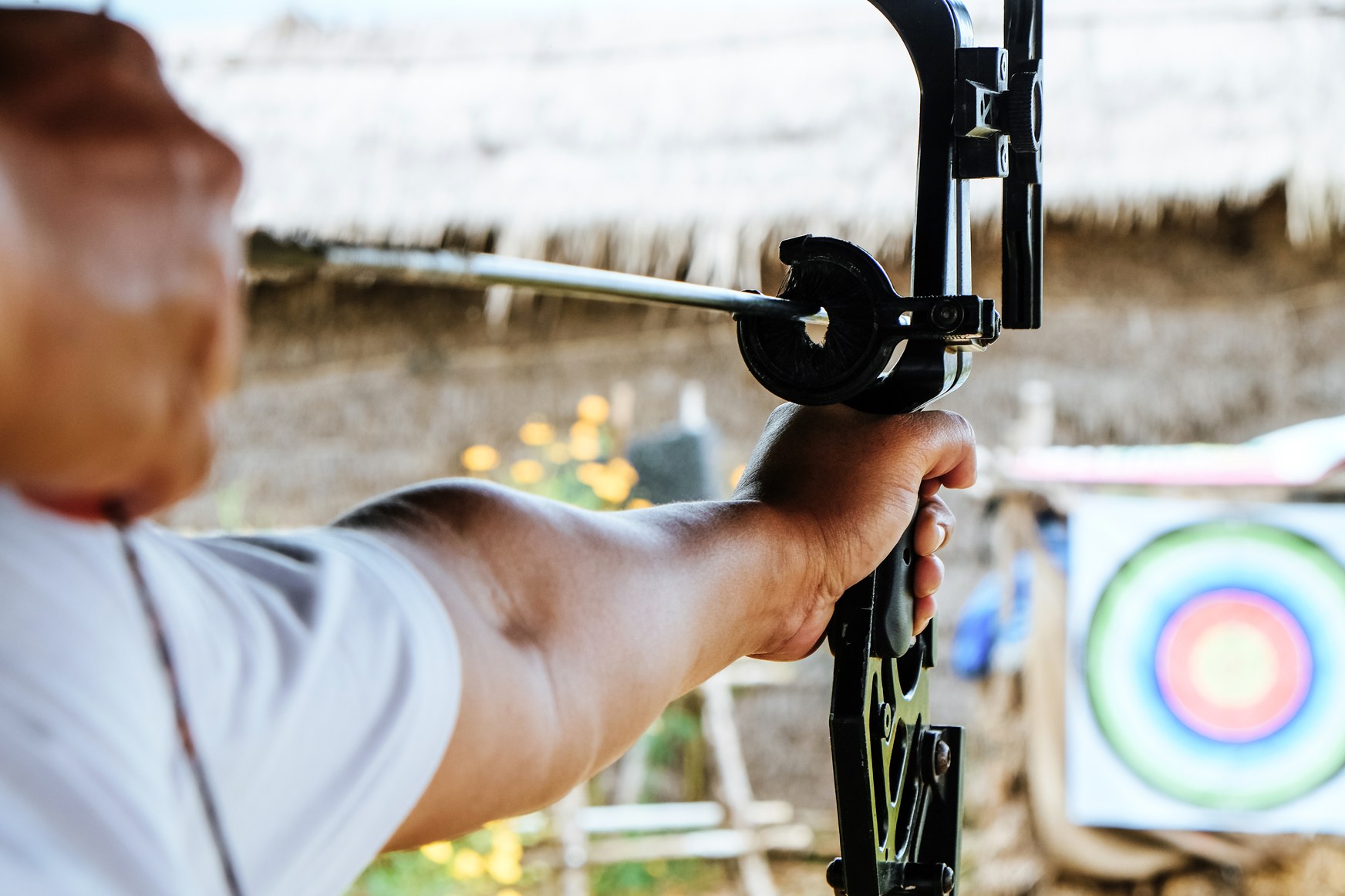
Flat-line range practice builds the shot; hunting practice proves it. Shoot your actual hunting bow and arrows, from the positions you'll actually use, in the clothing you'll wear — add gloves, an elevated position if you'll use one, wind, low light and fatigue as the season approaches. 3D courses with foam animal targets are the classic bridge from range to field.
Personal Effective Range
Your Personal Effective Range is not the farthest distance you have ever hit a target. It is the farthest distance — and the set of conditions — at which you have repeatedly placed clean, reliable shots with your actual hunting setup: hunting arrows, broadheads verified, hunting clothing, real positions, real conditions. Set it conservatively, from evidence, and it will be shorter than your best-ever range day. No universal yardage applies: this number is personal by design.
Range Ready vs Field Ready
Range ready
Good groups at known distances from a stable position, in comfort, with no time pressure.
Field ready
The same shot quality reproduced cold, gloved, tired, elevated or awkward — with an animal in front of you. Field readiness is range readiness plus conditions.
Field Skills
Scouting
Scouting is learning where animals travel, feed and bed before the season — trails, sign, water and food sources, observed legally and respectfully. Pre-season scouting decides your stand location; done well, it does more for a first season than any equipment upgrade.
Public vs Private Land
Public land (state or federal) has its own regulations, sometimes permits, and often more hunting pressure. Private land requires the landowner's explicit permission — written where available — and nothing else substitutes for it. Confirm the specific property's rules and your access before the season.
Wind and Concealment
Game animals live by smell and motion. Hunt the wind — approach and position so your scent travels away from where animals will be — and move slowly, quietly and sparingly. Camouflage helps, but stillness and wind discipline matter more than any pattern.
Treestand vs Ground
Elevated positions give visibility and help your scent disperse, but they add harness discipline and the risks of height. Ground hunting in natural cover is simpler and often underrated for a first season. Choose by terrain and by what you have genuinely practiced — not by what looks advanced.
Safety in the Field
Treestand Safety
Falls from elevated stands are a leading cause of hunting injury — and they are preventable. Always use a full-body safety harness, always stay connected while climbing, hunting and descending, and always follow the manufacturer's instructions for your stand. Never improvise a stand or a safety system, and never use homemade construction in place of certified equipment. If this is new to you, practice at ground level before the season.
Other Field Safety
- Tell someone where you're hunting and when to expect you back.
- Know your target and what is beyond it — every shot.
- Treat broadheads as the cutting tools they are.
- Carry basic field essentials and a way to communicate.
- Check the weather and dress for the real conditions, not the forecast.
Shot-Selection Responsibility
You are responsible for every arrow you release. That means waiting for a clear, calm, appropriate opportunity within your Personal Effective Range — and recognizing that most of the time, the correct decision is not to shoot. Formal bowhunter education covers species-specific shot selection in depth; the general rule is simple: if you are not certain, you do not shoot.
Passing the Shot
Passing is not failure — it is the decision that keeps the sport ethical. Wind wrong, angle marginal, light failing, animal too far or too alert, anything unsettled in your own preparation: let it walk. There will be another opportunity, and a passed shot costs nothing.
After the Shot
Preparation continues after the release. Watch and listen, mark the location carefully, know your state's rules and expectations for tracking and recovery, and follow the blood-trailing and recovery practices taught in bowhunter education. Recovery effort is part of the ethical shot — plan for it before the season, not during it.
First Season Roadmap
Education and legal groundwork
Complete hunter and bowhunter education, confirm licenses, tags, seasons and equipment rules, and find a mentor.
Equipment and practice
Fit and tune your hunting setup, verify broadheads, and practice in hunting conditions to establish your Personal Effective Range.
Access and scouting
Confirm access and property rules, scout your location, and check the weather and your gear one final time.
Hunt conservatively
Stay within your proven range, practice treestand or ground safety, and pass anything uncertain.
Are You Actually Ready to Bowhunt?
An unscored checklist — no percentages, no points. Go down the list honestly:
- Licenses, tags and season dates confirmed with your state agency.
- Hunter education completed; bowhunter education where required.
- Instruction and a mentor or program in place.
- Bow fitted, draw weight controlled, arrows matched and broadheads verified.
- Personal Effective Range established with the hunting setup, in hunting conditions.
- Legal access confirmed for a specific property.
- Safety systems learned and practiced — harness if elevated, communication plan set.
- You understand shot selection, passing and your after-shot responsibilities.
If an important box is still uncertain, that is your next preparation task — not a problem to solve on opening morning.
Common Beginner Mistakes
- Buying gear before verifying requirements and learning to shoot — the order matters.
- Hunting beyond practiced ability — your best-ever shot is not your range.
- Practicing only field points — verify broadheads; they fly differently.
- Practicing only from the flat line — add positions, clothing and conditions.
- Relying on another state's rules — verify your own.
- Hunting unconfirmed access — permission and public rules come first.
- Ignoring wind — it defeats more hunts than any gear gap.
- Skipping the safety harness — non-negotiable at height.
- Forcing marginal shots — passing is the skill.
What You Do Not Need Yet
You don't need premium bows, rangefinders, trail cameras, elaborate layering systems or a wall of accessories to have a successful first season. You need legality, education, a fitted bow, matched arrows, honest practice and good judgment. Gear upgrades earn their place after the fundamentals are proven.
Conservation and Ethics
Hunters fund much of North America's wildlife conservation through licenses, tags and excise taxes on equipment — and ethical behavior is what keeps public support and access alive. Treat the animal, the land, the law and other people in the field with respect, and you are practicing conservation as well as hunting. For the deeper hunting craft after this guide, continue with mastering the art of bow hunting.
Frequently Asked Questions
Start with your state wildlife agency: confirm the license and education requirements that apply to you, then find a beginner archery program and learn to shoot safely before you ever think about hunting. Instruction and a mentor come before equipment.
Always with your state wildlife or fish and game agency — licenses, seasons, equipment rules, education requirements and land access rules all vary by state and change over time. Never rely on another state's rules or an old forum post.
Yes. Hunter education is required for first-time hunters in every state, but age thresholds and exemptions vary, and some states also require a separate bowhunter education course. Confirm what applies to you with your state agency.
Start with local archery clubs, ranges and pro shops — most beginner programs include instruction, and many experienced bowhunters mentor through clubs, state mentor programs and apprentice-license systems. Formal bowhunter education is also a structured first step.
No. Legal minimums vary by state and species, and the right starting weight depends on your build, technique and equipment. For hunting, your draw weight must meet the legal minimum AND be one you can draw and hold calmly in field conditions. Verify the legal minimum with your state agency.
Practice with your actual hunting setup — bow, arrows, broadheads, release, clothing — and from hunting-like positions, not only from a flat range line. Add realistic conditions gradually: cold, gloves, elevated positions if you'll use them, and fatigue. Your hunting range is set by what you can repeat in those conditions.
The farthest distance — and conditions — at which you have repeatedly placed clean, reliable shots with your actual hunting setup. It is usually shorter than your best-ever range shot, and it is personal: it depends on your accuracy, grouping, equipment and conditions, not on a universal number.
Because hunting adds variables the range removes: clothing, awkward positions, wind, light, fatigue, time pressure and the presence of a live animal. A shooter who groups well on a flat line can still struggle from a treestand in a jacket. Practice the conditions you will actually hunt in.
Check the land's status and rules directly: public land managed by your state or federal agency has its own regulations and sometimes permits, and private land requires the landowner's permission. Written permission is wise where available. Verify access before the season, not during it.
Work through a readiness checklist honestly: legal requirements confirmed, education done, a mentor or program found, gear matched and practiced, realistic practice completed with your hunting setup, access confirmed, and safety systems learned. Any box still uncertain is your next preparation task.