
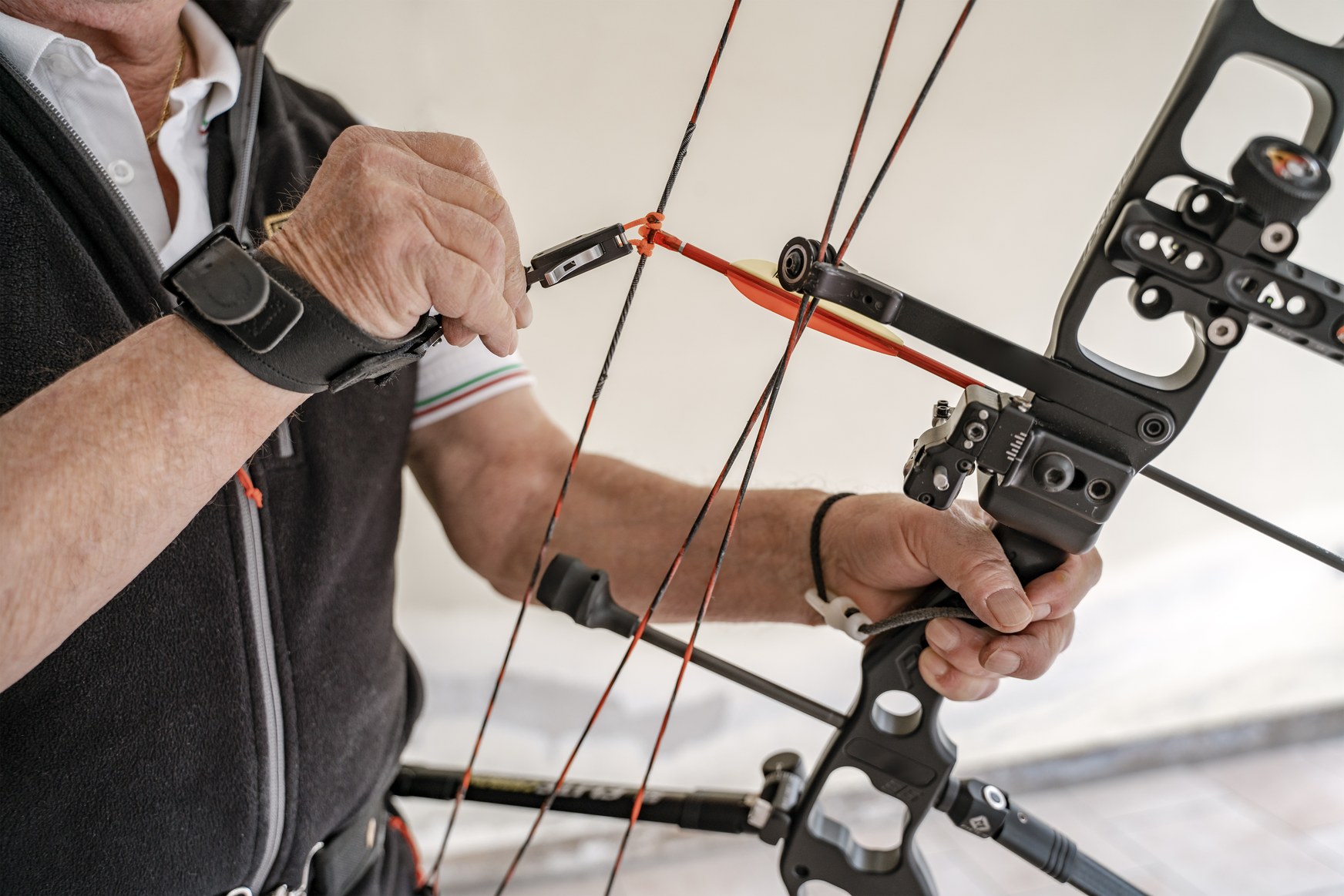
Short answer: choose a recurve if mechanical simplicity, finger-release shooting, Olympic-style or barebow paths appeal to you. Choose a compound if the cam and let-off system, sight-and-release aiming, compound target disciplines or the equipment commonly used in modern bowhunting appeal to you. If you're unsure, take a beginner lesson and try both with properly fitted club or rental equipment before buying — the bow that fits your goals beats the bow that wins internet arguments.
📋 Key Takeaways
- The cam and let-off system is the biggest mechanical difference between the two bows.
- A recurve keeps you holding increasing or full draw load at anchor; a compound drops to a low holding weight after the peak.
- Simple machine ≠ simple shooting — and a complex machine doesn't make aiming complex.
- Both bows need correct fit, manageable draw weight and real practice; neither is universally the better beginner bow.
- Your goal matters more than tribal loyalty — competition, recreation, barebow and hunting point to different setups.
📑 Table of ContentsJump to any section in this guide 21 sectionsView contentsHide contents
- How Each Bow Works
- Let-Off, Explained Properly
- Recurve Draw Feel vs Compound Draw Feel
- What Does "Easier" Actually Mean?
- Aiming and Release
- Accuracy
- Speed and Power
- Draw Length: A Hidden Difference
- Draw Weight: Same Number, Different Feel
- Should You Learn Recurve Before Compound?
- Switching Later: What Transfers and What Changes
- Cost: Real Ownership, Not Just Bow Price
- Maintenance and Service
- Portability and Storage
- Target Archery
- The Olympic Context (2026 Update)
- Bowhunting
- Which Is Better for Beginners?
- Choose by Goal
- Pros and Trade-Offs
- Frequently Asked Questions
The Difference in One Glance
| Factor | Recurve | Compound |
|---|---|---|
| Mechanism | Limbs and string; energy stored in the limbs | Limbs, cams, cables and string working as a system |
| Full-draw feel | You hold the draw load at anchor | Peak weight, then let-off to a lighter holding weight |
| Typical release | Fingers (tab or glove) | Mechanical release aid (common) |
| Typical aiming | Sight in Olympic-style; no sight in barebow | Peep + sight; fixed pins or magnification depending on use |
| Draw length | Archer-driven; changes the actual draw weight | Mechanically configured; must match the archer |
| Equipment complexity | Lower — fewer moving parts | Higher — cams, cables, timing, tuning |
| Maintenance | Strings, limbs and basic tuning | Strings and cables under high tension; shop service common |
| Competition paths | Olympic-style, barebow, target, field, 3D | Compound target, field, 3D — plus LA28 mixed-team Olympic debut |
| Common recreational uses | Clubs, teaching, Olympic-style, traditional | Hunting, target compounds, high-tech recreation |
How Each Bow Works
Recurve. A riser (the handle section), two limbs that curve away from the archer at their tips, and a string. When you draw, the limbs bend and store energy; the recurved tips give the bow more energy per draw length than a simple straight-limb bow. Draw weight generally rises as you pull further, and you release the string with your fingers.
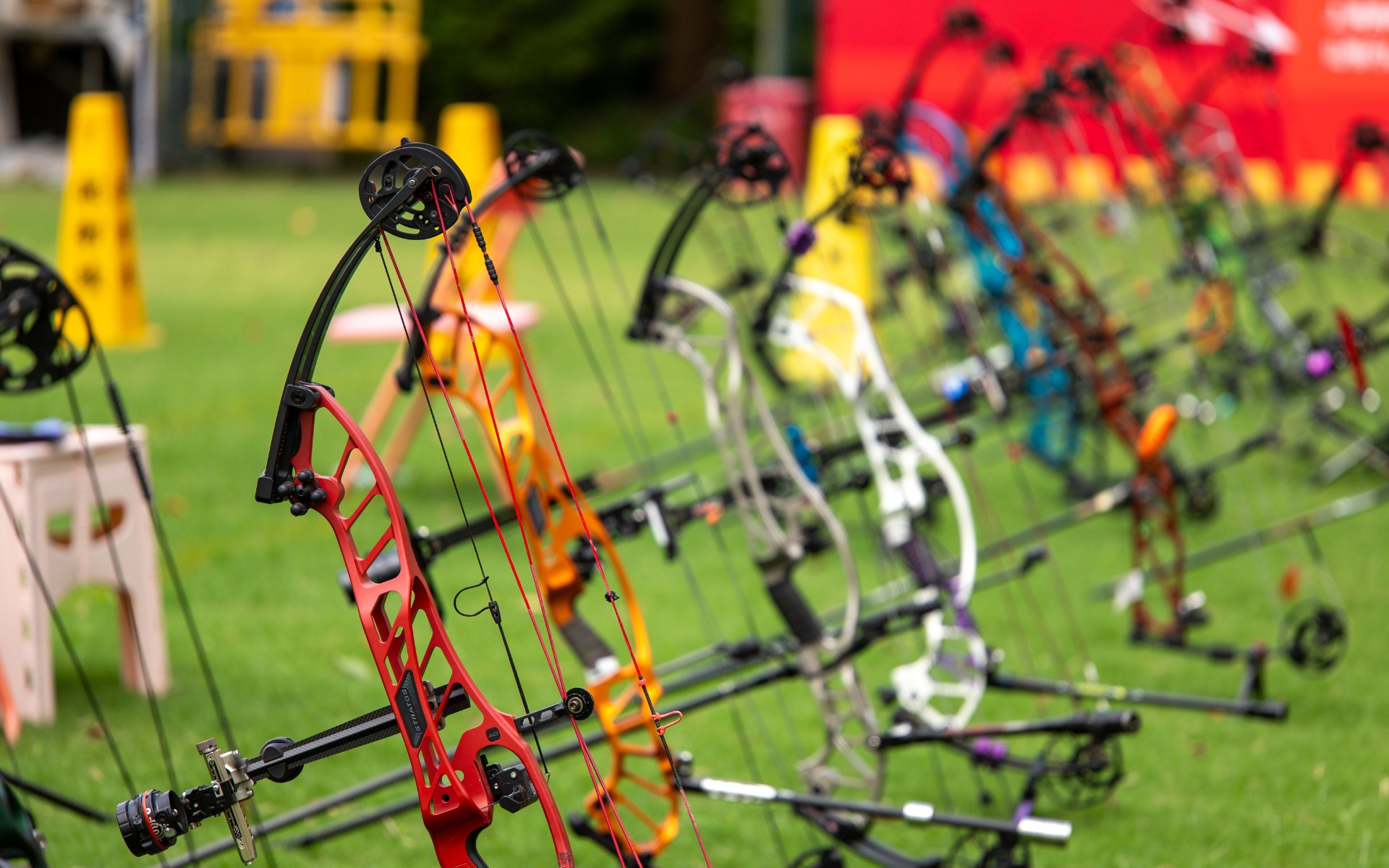
Compound. A riser, limbs, and a system of cams (the oval wheels) connected by cables and a string. The cams change the leverage through the draw: effort rises to a peak draw weight, then the cams "roll over" and the holding weight drops dramatically — that drop is let-off — before you reach a defined stop called the wall. Most compound shooters release with a mechanical release aid clipped to the string.
Both designs do the same job — store energy and hand it to the arrow — but they distribute the archer's effort across the draw very differently.
Let-Off, Explained Properly
Let-off is the percentage of peak draw weight you no longer hold at full draw. If a compound has a 60-pound peak weight and 80% let-off, you pull through 60 pounds but hold roughly 12. Modern compounds commonly offer a range of let-off settings — often around 65% to 90% depending on the model and configuration — so treat any single percentage as an example, not a universal rule.
Two things beginners miss about let-off:
- You still do the heavy part — let-off only happens after you move through the peak of the draw cycle.
- It changes the aiming experience — holding a fraction of the peak weight at full draw lets you aim without fighting the bow, which is why compounds feel so steady at anchor.
RECURVE
Effort generally keeps rising through the draw — at full draw you continue holding substantial load.
COMPOUND
Effort rises to the peak, the cams roll over, and holding weight drops through let-off near full draw.
Illustrative — not to scale. Every bow's draw curve differs; this shows the general feel, not measurements.
Recurve Draw Feel vs Compound Draw Feel
Weight builds steadily as you draw, and at full draw you continue holding the full load of your setup. The shot is a continuous conversation between you and the bow from start to release.
Weight climbs to a peak, the cams roll over, the load drops into the valley, and you settle against the wall. The bow holds most of its own weight while you aim.
Illustrative description — every bow's curve differs, and this is about feel, not measurements.
What Does "Easier" Actually Mean?
"Which is easier?" is really several different questions wearing one coat:
- Easier to hold at full draw? Often the compound, thanks to let-off.
- Easier to understand and maintain mechanically? Usually the recurve.
- Easier to produce tight groups quickly? Compound equipment generally provides more mechanical assistance and repeatability — but how quickly any individual improves depends on coaching and practice, not a guaranteed timeline.
- Easier to master at the elite level? Neither. Elite performance in either discipline takes years of dedicated work; the challenges are different, not ranked.
Aiming and Release
- Olympic-style recurve — finger release, a sight pin, a consistent anchor and reference points, and (at advanced setup) a clicker that signals reaching full draw.
- Barebow recurve — no sight under World Archery barebow rules; aiming methods include string walking and instinctive reference.
- Compound — a mechanical release is common, with a peep sight and pin sight working together; target compounds may use magnification and a scope-style sight, while hunting setups often use fixed multi-pin sights.
There is no single "correct" configuration in either family — the equipment follows the discipline you choose.
Accuracy
Let's be precise. Compound technology provides features that support repeatability — let-off, a mechanically defined draw length with a solid wall, mechanical releases and refined sights — and World Archery describes compound as the most mechanically efficient and accurate bowstyle. But accuracy in the real world is an archer-shaped problem: execution, tuning and fit decide most of it. A recurve shot well outshoots a compound shot badly, every time.
Speed and Power
Compound systems generally transfer energy to the arrow more efficiently, and comparable setups often produce higher arrow speeds — but speed is a product of draw weight, draw length, arrow mass and bow efficiency, not bowstyle alone. Comparing a 70-pound hunting compound against a 25-pound beginner recurve tells you nothing useful. Judge each bow by its own setup, and never buy speed you can't control.
Draw Length: A Hidden Difference
On a recurve, your draw length is set by your body and it changes the actual draw weight you feel. On a compound, draw length is mechanically configured — cams or modules are set so the bow's full draw matches you exactly. A compound with the wrong draw length setup cannot be shot properly, which is why professional fitting matters so much for a first compound. An estimate like wingspan divided by 2.5 is a starting point, not a substitute for being measured. For the full beginner walkthrough, see archery for beginners.
Draw Weight: Same Number, Different Feel
A 40-pound recurve and a 40-pound compound are not the same experience. The recurve's marked weight relates to a standardized reference draw length and climbs through your draw; the compound's 40 pounds is a peak you pass through on the way to let-off. That's why comparing the two numbers directly misleads. Whatever you choose: start at a weight you can draw slowly and hold calmly, confirm it with a coach or pro shop, and resist the urge to prove anything with poundage.
Should You Learn Recurve Before Compound?
Not necessarily — but it's a popular and sensible path. Many beginner programs use recurve because light club bows are practical, the equipment is simple, and every form fault is visible immediately. That visibility is a teacher: a recurve rewards consistency in the archer, where a compound rewards consistency in the equipment — and can quietly mask habits that surface later.
However, if you know you want compound archery — for target, field or hunting — learning compound from day one with proper fitting and coaching is entirely legitimate. The foundations overlap, but they are not identical disciplines, and starting where you intend to stay is never a mistake.
Switching Later: What Transfers and What Changes
Transfers well
Range safety and etiquette, stance and alignment awareness, posture, back engagement, a consistent shot routine, follow-through discipline, and target focus.
Changes substantially
The draw cycle feel, anchor references, aiming system, release execution, holding weight, draw-length setup and equipment tuning.
Expect an adaptation period — the transfer is real, but it isn't seamless, and both bows deserve respect as their own discipline.
Cost: Real Ownership, Not Just Bow Price
Current US market entry costs (rough ranges across multiple reputable sources, not fixed prices): a basic recurve starter system — bow, limbs, string, rest, finger tab, arm guard and arrows — commonly lands around $150–400, while a basic compound starter system — bow, rest, sight, peep, release aid and arrows, plus setup work — commonly starts around $300–700. Quality, discipline and accessories move both numbers a lot.
Beyond the purchase, ownership costs differ too: recurves need strings and occasionally limbs; compounds need strings and cables, and shop service for timing and tuning is more common. There's no honest fixed annual number for either — but the compound's service footprint is generally the larger of the two.
Maintenance and Service
- Recurve — fewer components; takedown bows assemble with a stringer and proper technique; strings, limbs and nocking points still need inspection and care, and tuning exists.
- Compound — cams, cables and string run under substantial tension; timing and setup are more involved, and certain work genuinely requires appropriate tools or a professional shop. Don't attempt compound service you haven't been trained for.
Portability and Storage
This one is a trade-off, not a winner. Many takedown recurves break into a riser and limbs and travel very compactly. Compounds are shorter overall when assembled — often dramatically so — but usually travel assembled in a protective case. Neither is universally more portable: the recurve wins on packed size, the compound on assembled length.
Target Archery
Both bows have major international target divisions. World Archery competition includes recurve and compound categories with different distances and target faces — for example, outdoor international rounds shoot compound at 50 meters and recurve at 70 meters in their standard formats. Those numbers are international competition context, not beginner distances. For the wider picture of every archery discipline, see our types of archery guide.
The Olympic Context (2026 Update)
Recurve has been the established bowstyle of the Olympic archery programme since archery returned to the Games in 1972. That picture is changing: compound mixed team has been added to the programme for Los Angeles 2028, where compound archery will make its Olympic medal debut. Recurve individual and team events remain the established formats — compound does not currently have individual Olympic events.
Bowhunting
Compound bows dominate modern bowhunting for practical reasons: mechanical efficiency, let-off for holding at full draw while an animal moves, and consistent sight systems. Traditional and recurve bowhunting also thrive, with their own communities and seasons. What we won't do here is make legal claims for you: hunting regulations — equipment rules included — vary by state, season and species. Verify current requirements with your state wildlife agency. Start with our bow hunting license guide and mastering the art of bow hunting.
Which Is Better for Beginners?
The honest answer is that the wrong draw weight and bad fit hurt beginners far more than the wrong bowstyle. If you value simplicity, finger release and an Olympic-style or barebow path, explore recurve. If you value let-off, sight-and-release aiming, compound target disciplines or the modern bowhunting equipment path, explore compound. If you don't know yet, that's normal — start with a lesson and try both.
Choose by Goal
A matching tool, not a ranking:
- I want Olympic-style competition → recurve path.
- I want compound target competition → compound path.
- I want barebow → recurve-based path.
- I want simple recreational shooting → try recurve first; either can work.
- I want modern bowhunting → compound is common; verify local rules and your own preference.
- I love traditional shooting → recurve and the traditional family.
- I care most about mechanical simplicity → recurve.
- I want let-off at full draw → compound.
- I am completely unsure → try both before buying.
Still Unsure? Try Both Before You Buy
If you still don't know whether recurve or compound fits you, a beginner session with appropriately fitted club or rental equipment can tell you more than hours of comparison reading. Try both where available, at a manageable draw weight, and feel the two draw cycles for yourself — then ask for basic fit guidance before buying anything.
Pros and Trade-Offs
Recurve pros
Mechanical simplicity, multiple disciplines (Olympic-style, barebow, traditional), takedown portability and generally lower entry cost.
Recurve trade-offs
Continuous draw load at anchor, finger release demands consistency, and less mechanical assistance for aiming.
Compound pros
Let-off, a repeatable mechanical draw system, advanced aiming and release options, and high mechanical efficiency.
Compound trade-offs
Greater equipment complexity, generally higher setup cost and more specialized maintenance and service.
Frequently Asked Questions
Neither is universally better. Recurve equipment is mechanically simpler and common in beginner programs, while compound bows often produce tight groups sooner thanks to let-off and aiming aids. Many coaches suggest recurve for visible fundamentals, but a beginner who wants compound can learn it from the start with proper fitting and instruction. Try both before deciding.
It depends what "easier" means. Compound bows are usually easier to hold at full draw because of let-off, and their mechanical systems can help repeatability. But the equipment itself is more complex to set up, tune and maintain. A recurve is simpler mechanically but asks more of the archer during every shot.
Not necessarily. Recurve-first is a common and sensible path because light club bows are practical and form fundamentals are very visible — but the skills that transfer (stance, posture, routine, consistency) can also be learned on a compound with good coaching. Choose the style you actually want to shoot.
Compound systems provide mechanical features — let-off, a fixed draw length with a solid wall, mechanical releases and sophisticated sights — that support repeatability, and World Archery describes compound as more mechanically efficient and accurate as a bowstyle. Real-world accuracy still depends heavily on the archer's execution, tuning and fit.
Generally yes at entry level: a basic starter recurve setup commonly costs less than a basic compound setup, partly because compounds add a sight, peep, rest and release aid. But prices vary enormously by quality, discipline and accessories, and either style can get expensive.
Compound bows generally do. Their cams, cables and strings run under substantial tension, and certain service work requires appropriate tools or a professional shop. Recurves have fewer moving parts, though strings, limbs and tuning still need inspection and care.
Yes — many archers shoot both. Fundamentals like stance, posture, routine and follow-through transfer well. What changes is the feel: the draw cycle, anchor references, aiming system, release execution and holding weight all work differently, so expect an adaptation period.
Recurve is the established bowstyle for the Olympic individual and team events. Compound archery is entering the Olympic programme at Los Angeles 2028, where the compound mixed-team event will make its Olympic medal debut.
Both have major international target divisions. Recurve covers Olympic-style, barebow and indoor/outdoor target formats, while compound has its own World Archery target divisions with different distances and target faces. Choose by which competition experience appeals to you.
Compound bows are extremely common in modern bowhunting because of mechanical efficiency, let-off and aiming systems — but traditional and recurve bowhunting also exist. Check your state's equipment rules for the season and species you plan to hunt.